People often describe Jackson as feeling different from other cities in the South, even if they can’t quite explain why. It’s not necessarily taller, denser, or busier than its neighbors. If anything, it can feel serene. Softer.
Part of that comes down to something that’s easy to overlook because it’s everywhere.
The trees.
Spend a few minutes driving through Belhaven, Fondren, Eastover, or parts of Northeast Jackson and you’ll notice streets shaded by mature oaks that arch overhead, pockets of woodland tucked between neighborhoods, and parks that feel less like carefully landscaped green spaces and more like pieces of the original landscape that happened to stay put.
It’s not just an aesthetic quirk. Jackson has one of the more substantial urban tree canopies in Mississippi, and those trees influence everything from summer temperatures to wildlife populations. They also tell part of the story of how the city grew in the first place.
A city shaped by the landscape, not the other way around
Jackson sits in a part of Mississippi that was already heavily forested long before anyone imagined a capital city here. Hardwood forests, pine stands, creeks, and wetlands covered much of the area, fed by the Pearl River and countless smaller waterways.
As the city expanded through the nineteenth and twentieth centuries, developers certainly cleared land. But compared to many growing American cities, Jackson often expanded around natural features instead of completely replacing them. Rolling hills, drainage corridors, and established trees became part of neighborhood design rather than obstacles to erase.
That approach is still visible today. Older neighborhoods rarely feel flat or overly engineered. Roads curve with the terrain. Large trees often stand just a few feet from sidewalks because they were planted generations ago, or in some cases, were already there before the surrounding homes.
The result is a city that feels surprisingly wooded without trying very hard.
The hidden job description of a tree
It’s easy to think of urban trees as decoration, but researchers increasingly describe them as infrastructure.
That may sound strange until you consider everything a mature tree does during a Mississippi summer.
Its canopy shades pavement before it has a chance to absorb heat. Its leaves release water into the air through transpiration, creating a natural cooling effect. Its roots slow stormwater before heavy rain overwhelms drainage systems.
According to the City of Jackson’s Urban Tree Inventory and Management Plan, these environmental services have measurable economic value. Larger, mature trees reduce energy demand, improve air quality, intercept rainfall, and help extend the life of roads by keeping pavement temperatures lower (City of Jackson, 2025).
In other words, Jackson’s trees aren’t just making the city prettier. They’re doing work every day.
A cooler city, one neighborhood at a time
If you’ve ever crossed an enormous parking lot in July, you’ve experienced what’s known as the urban heat island effect, even if you’ve never heard the term.
Concrete and asphalt absorb sunlight throughout the day and slowly release that heat back into the air. Cities with fewer trees tend to stay warmer long after the sun goes down because so much heat is trapped in buildings and pavement.
Tree canopy changes that equation.
The shade itself keeps surfaces cooler, while evaporation from leaves lowers surrounding air temperatures. Studies from the U.S. Forest Service have found that neighborhoods with healthy tree cover can be noticeably cooler than nearby areas with little vegetation.
In Mississippi, where air conditioning runs for months at a time, even modest reductions in temperature can make a difference for energy use and comfort.
Wildlife notices the difference too
Jackson’s trees don’t only benefit people.
They connect habitats.
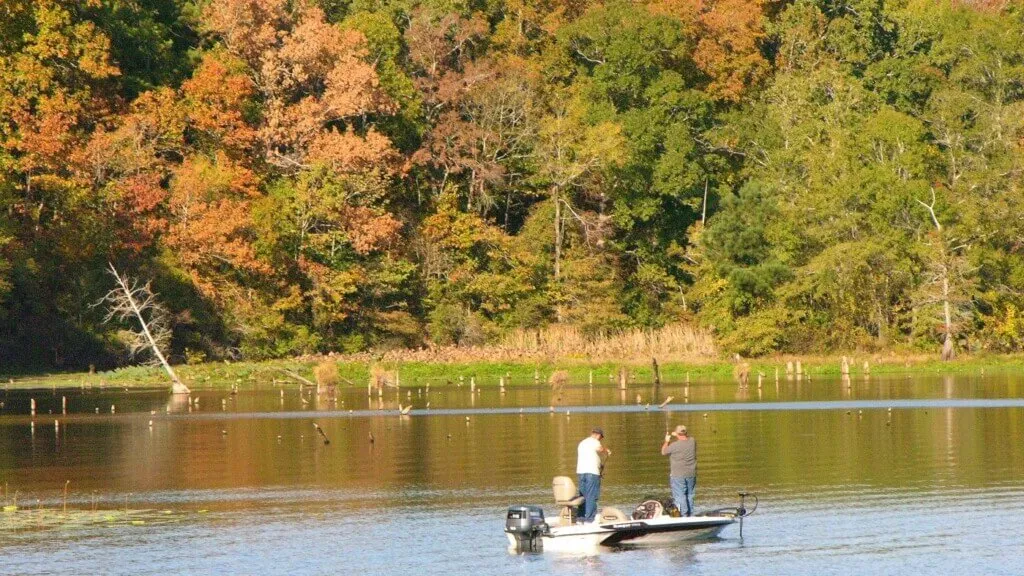
Birds moving along the Mississippi Flyway use wooded neighborhoods as resting points during migration. Native bees and butterflies depend on flowering trees throughout the year. Squirrels, owls, hawks, woodpeckers, and countless smaller species move between parks, creek corridors, and residential neighborhoods using tree canopy as cover.
It’s one reason places like LeFleur’s Bluff State Park don’t exist in isolation. Green spaces become more valuable when they’re connected to other patches of habitat across a city.
Even a row of mature street trees can become part of that network.
The challenge is keeping it that way
One of the interesting things about urban forests is that they aren’t permanent.
Trees age. Storms take down limbs. Diseases spread. Invasive insects arrive.
Jackson has already dealt with losses from Dutch elm disease and now faces the same concerns over invasive pests that many American cities do. That’s one reason the city’s forestry plan encourages planting a wider variety of species rather than relying too heavily on a handful of favorites. Diversity makes an urban forest more resilient over time.
The best time to plant a tree may have been decades ago, but the second-best time is before today’s canopy starts disappearing.
One of Jackson’s greatest assets isn’t made of concrete
Cities usually define themselves by the things people build. Skylines, bridges, stadiums, historic buildings.
Jackson’s identity has always been a little different. Its character comes just as much from what was left standing.
The canopy that shades neighborhood streets today wasn’t planted for Instagram photos or weekend strolls. Much of it exists because previous generations understood that a growing city didn’t have to replace every part of the landscape that came before it.
That decision continues to pay dividends every summer, every spring migration, and every afternoon when a shaded street feels just a little more inviting than one without a single tree.
It’s easy to overlook something that’s always been there. Maybe Jackson’s trees deserve a second look.