Three hours can disappear surprisingly quickly at a vintage market.
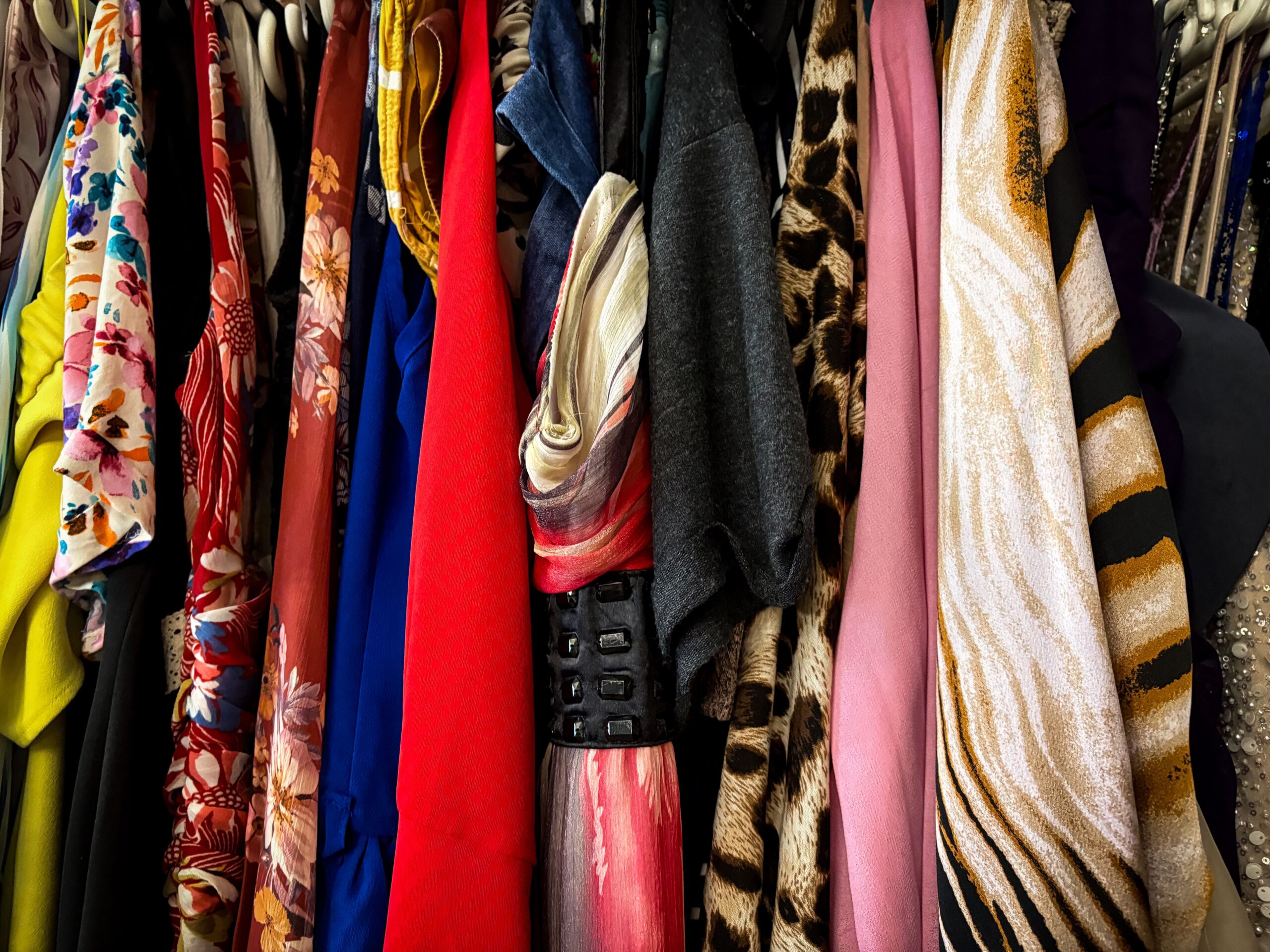
At Off Campus Vintage Market, shoppers drifted between racks balancing iced coffees, armfuls of denim, and the kind of excitement that comes from finding something nobody else has. One table held stacks of faded concert tees. Another was covered in leather bags that looked like they’d lived several lives before ending up in Jackson. There were perfectly worn jackets, tailored trousers hiding between oversized sweatshirts, and enough vintage jewelry to make anyone stop and dig for a while.
The clothes were good. The people watching was even better.
Some shoppers leaned into Western influences with boots and silver jewelry. Others looked like they had borrowed inspiration from the early 2000s, pairing tiny sunglasses with baggy jeans and racing jackets. There were people in linen, people in streetwear, people wearing pieces that felt impossible to place in any particular trend cycle.
Nobody looked alike.
And maybe that’s what makes style in Jackson more interesting than people often give it credit for.
Mississippi has a reputation for being behind when it comes to fashion. It’s a stereotype that tends to follow much of the South. The assumption is that trends originate somewhere else, whether that’s New York, Los Angeles, or Copenhagen, and eventually trickle down to places like Jackson years later.
But that perspective may say more about how people think fashion should work than how people actually get dressed.
In cities where trends move quickly, style can start to feel surprisingly uniform. Spend enough time in places like Philadelphia or Detroit and certain aesthetics become easy to spot. The same silhouettes appear season after season. The same brands cycle through social feeds. The same Pinterest boards and TikTok videos inspire thousands of nearly identical outfits.
That’s not necessarily a bad thing. Fashion has always been social. People have always borrowed ideas from one another. Clothes can help signal belonging, interests, and identity.
At the same time, constantly being exposed to rapidly changing trends can create pressure to keep up. Getting dressed becomes less about personal taste and more about demonstrating awareness. The question shifts from “Do I like this?” to “Is this still in?”
Jackson doesn’t seem particularly interested in asking that question.
There are certainly trends here, but there doesn’t appear to be one dominant aesthetic everyone feels obligated to follow. Someone might wear cowboy boots to brunch, vintage Levi’s to a concert, a family heirloom necklace to dinner, or a blazer discovered at a thrift store for less than the price of lunch.
People wear things because they enjoy them.
That cultural difference might also explain why thrifting in Mississippi feels especially rewarding.
Visitors from outside the state are often surprised by what they find while digging through local thrift stores and vintage markets. They expect picked-over racks and limited selections, only to stumble upon quality denim, silk blouses, leather jackets, designer handbags, and occasionally luxury labels that would likely be snatched up immediately in larger cities.
Part of that can probably be attributed to geography, shopping habits, and simple luck.
But it may also have something to do with Mississippi’s relationship to clothing itself.
In places where there is less pressure to constantly reinvent a wardrobe for social media or chase every microtrend, clothes tend to stay in circulation longer. People buy items because they genuinely love them. They keep pieces for years. They inherit jackets from relatives, hang onto dresses worn to special occasions, and eventually donate things that still have plenty of life left in them.
Years later, someone else discovers those same pieces hanging quietly on a rack.
Thrifting, at its best, is about possibility. It’s about finding something unexpected and imagining what it could become. A jacket that belonged to someone else suddenly feels like the missing piece in your own closet. A pair of trousers that might have been overlooked in another city becomes your most complimented outfit.
Mississippi may never be considered a fashion capital, and honestly, that’s probably part of its appeal.
Without a rigid dress code, without the pressure to perform trend awareness at every turn, personal style here often feels more genuine. More eclectic. More reflective of individual taste than collective approval.
Maybe being slightly removed from the center of fashion culture isn’t a disadvantage after all.
Maybe it’s the reason getting dressed in Jackson still feels like an act of self-expression instead of an exercise in keeping up.
And maybe that’s why three hours spent digging through racks at a vintage market can leave someone with more than a denim jacket or a leather bag.
It can leave them wondering if Mississippi has been quietly doing personal style better than people ever gave it credit for.