
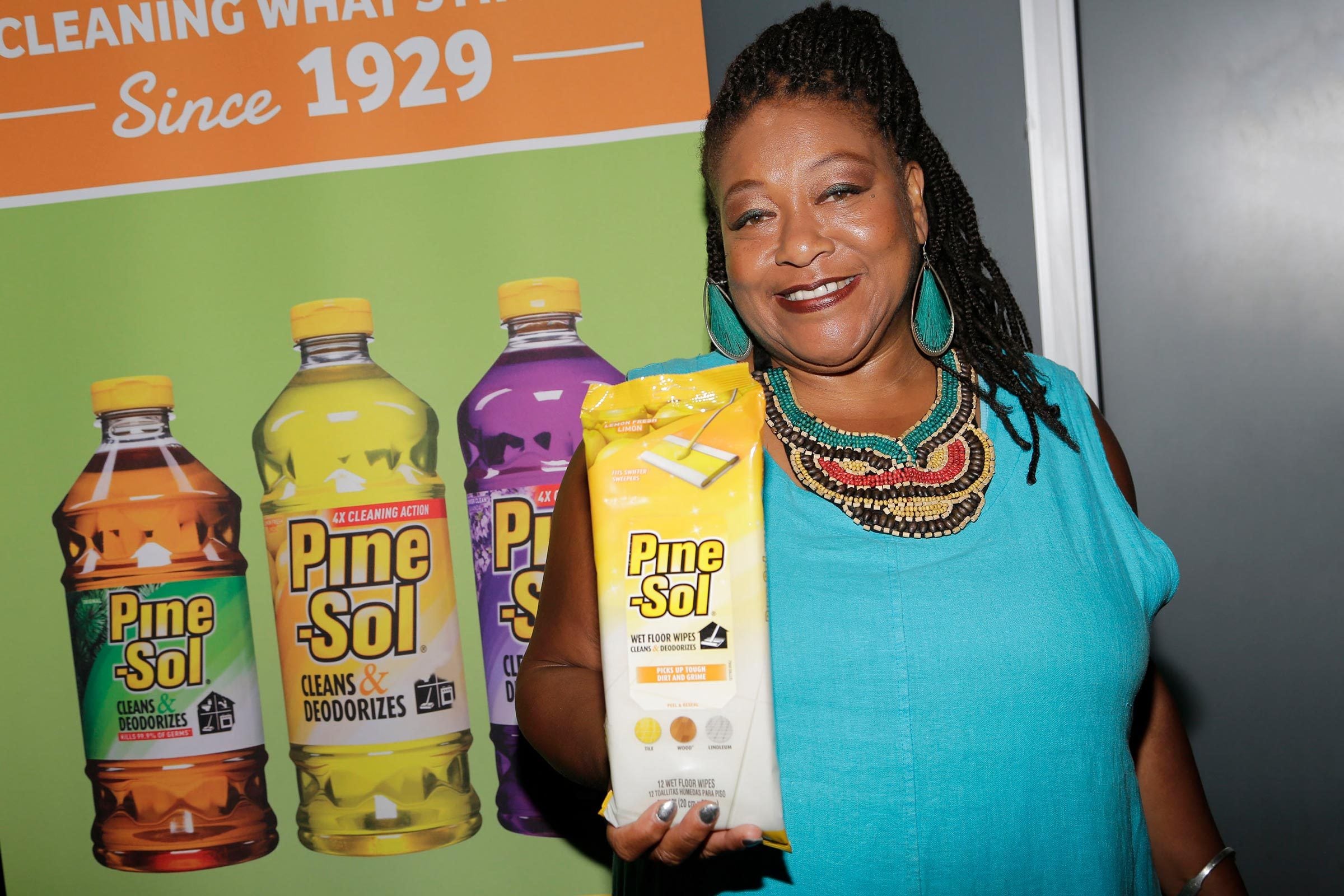
Everybody in Mississippi knows the smell of Pine-Sol.
You smell it in school hallways, church kitchens, waiting rooms, somebody’s aunt’s house right before company comes over. It’s one of those scents that immediately tells you somebody has decided things are about to get clean whether you participate willingly or not.
What most people do not know is that Pine-Sol was invented in Jackson.
Which feels improbable at first. Pine-Sol is so embedded into American life that it barely feels invented at all. It feels like it has always existed, sitting underneath kitchen sinks beside grocery bags full of reused plastic bags and a flashlight that may or may not work anymore.
But the product actually started here in 1929, when a Jackson chemist named Harry A. Cole created the original formula using oil derived from Southern pine trees. (Mississippi Encyclopedia, 2016)
And once you learn that, the whole thing starts making a weird amount of sense.
Mississippi’s relationship with pine trees has always been economic as much as environmental. In the early twentieth century, the South’s timber industry was enormous, and Mississippi was covered in longleaf and yellow pine forests that supplied lumber mills across the region. Pine trees were valuable for more than just wood. Their oils and resins could also be extracted and used in industrial products, soaps, disinfectants, and cleaning solutions. (Mississippi Encyclopedia, 2016)
At the time, Americans were becoming increasingly interested in sanitation and household cleanliness. Companies were marketing disinfectants as modern necessities. Germ theory had become more widely accepted, indoor plumbing was becoming more common, and cleaning products were starting to be tied to the idea of a respectable home.
Pine-Sol entered that world at exactly the right moment.
Harry Cole developed the cleaner in Jackson using pine oil taken from pine stumps, which feels fitting for Mississippi in a way that is difficult to explain. There is something very Southern about turning an overlooked natural resource into a household staple sitting in nearly every grocery store in America.
And unlike many modern cleaners, Pine-Sol had a smell that demanded your attention.
People trusted that smell because it smelled powerful. If your eyes watered a little bit, that probably meant it was working.
Over time, Pine-Sol became larger than the product itself. It turned into a kind of cultural shorthand. The smell alone could tell you what was happening before you even walked into the room.
Somebody was mopping.
Guests were coming over.
A church fellowship hall had just been cleaned after Wednesday night supper.
Your grandmother had decided the baseboards suddenly mattered.
In a lot of Southern households, cleanliness was never just about hygiene. It was connected to pride, hospitality, routine, and presentation. You cleaned because people were coming over. You cleaned because it was Saturday. You cleaned because your mother told you to clean, and that was the end of the discussion.
Pine-Sol became part of that rhythm.
The company grew rapidly throughout the twentieth century and eventually became a nationally recognized brand. Over the decades, ownership changed hands multiple times, and the product itself evolved alongside American consumer culture. Advertising campaigns pushed Pine-Sol as an all-purpose cleaner capable of handling almost anything inside a home. (The Clorox Company, 2025)
At some point, the brand also became deeply tied to Southern identity in a way that feels almost accidental.
Part of that is probably because pine trees themselves are so associated with the South. Part of it is because the product remained common in homes, schools, churches, and small businesses across Mississippi for generations. And part of it is simply because Southern households tend to keep traditions alive longer than the rest of the country realizes.
There are products that disappear quietly over time, and then there are products that become permanent fixtures in people’s lives.
Pine-Sol somehow managed to do the second one.
What makes the story especially strange is how many people from Mississippi still do not know the product started here. Pine-Sol became so nationally recognizable that its Jackson origins almost disappeared underneath its own success.
Which honestly happens a lot with Mississippi history.
The state has contributed an enormous amount to American culture, music, food, literature, and industry, yet many of those contributions eventually become detached from the place they came from. They become so absorbed into wider American life that people stop tracing them back to Mississippi at all.
Pine-Sol fits neatly into that category.
It is also one of those inventions that reveals how ordinary objects can carry entire cultural histories inside them. A bottle of cleaner sitting under a sink sounds mundane until you start pulling at the thread a little bit. Then suddenly you are talking about Southern timber industries, early twentieth-century chemistry, American attitudes toward cleanliness, church culture, and the strangely emotional role cleaning products play in family memory.
That last part sounds dramatic until you mention Pine-Sol to almost anyone raised in the South.
Everybody has a version of the same reaction.
Usually it starts with, “My grandma used that stuff constantly.”
And honestly, that might be part of why the product endured for so long. Pine-Sol does not just smell clean to people. It smells familiar.
It smells like somebody cared whether the house was in order.
It smells like preparation. Like routine. Like being told to lift your feet while the floor dries.
And apparently, it smells like Jackson too.
Sources
- Mississippi Encyclopedia, 2016
- The Clorox Company, 2025