

When people think about groundbreaking medical innovation, their minds often jump to places like Boston, New York, or Silicon Valley adjacent research hubs. Rarely does Jackson enter the conversation.
But it should.
Because on June 11, 1963, inside what is now the University of Mississippi Medical Center, a surgical team led by James D. Hardy performed the world’s first human lung transplant. It was a procedure that would lay the foundation for one of modern medicine’s most life saving fields.
This was not just a milestone for Mississippi. It was a moment that changed the trajectory of global healthcare.
A Radical Idea in an Unlikely Place
In the early 1960s, organ transplantation was still experimental, risky, and often controversial. Surgeons were just beginning to understand how to connect blood vessels, manage rejection, and keep patients alive after receiving foreign organs.
Dr. Hardy was not just participating in that frontier. He was helping define it.
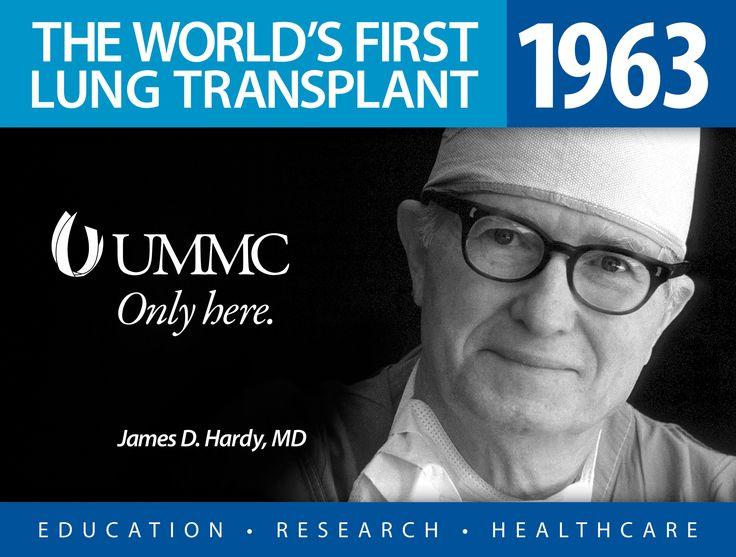
Dr. James D. Hardy MD – perfusiontheory.com
Working in Jackson, he spent years conducting transplant experiments, including hundreds of lung transplants in animals, refining the techniques needed to attempt the procedure in humans.
At the time, the idea of replacing a human lung was almost unthinkable. The lungs are uniquely fragile and highly exposed to infection, which made transplantation especially difficult. Even if the surgery worked, the immune system often did not cooperate.
Still, Hardy pushed forward.
June 11, 1963 The First Attempt
The patient was a 58 year old man suffering from advanced lung cancer. His condition was dire, and conventional treatments had failed. Hardy and his team made a bold decision to attempt a lung transplant using a donor organ from a recently deceased patient.
The operation itself was a success.
The transplanted lung functioned. Blood flowed. The patient could breathe using the new organ, something no human had ever experienced before.
But the victory was short lived.
The patient survived 18 days before dying from complications, including infection and kidney failure.
By today’s standards, that might sound like a failure. But in 1963, it was a breakthrough.
It proved something essential. A human lung transplant could work.
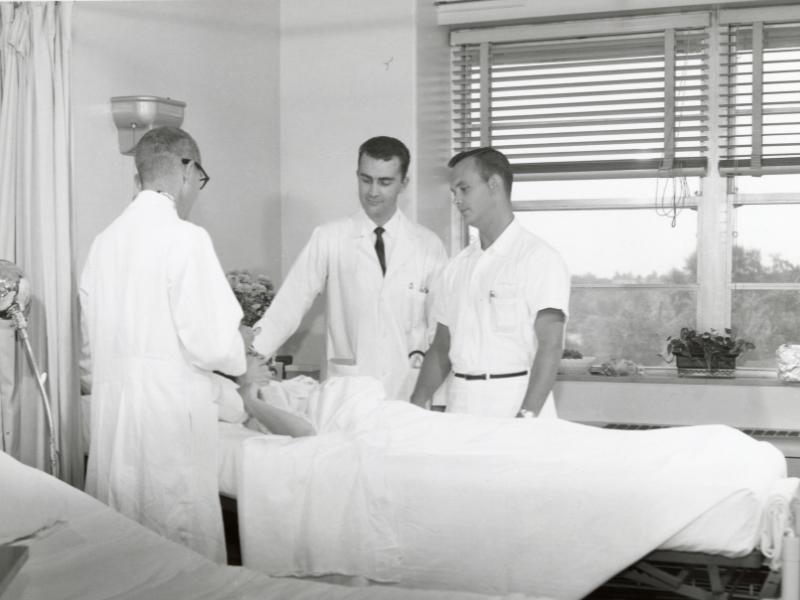
Department of Medicine looks back on 70 years of progress – umc.edu
Overshadowed by History
In a twist that feels almost symbolic, this world changing medical achievement did not make the headlines it deserved.
That same night in Jackson, civil rights leader Medgar Evers was assassinated. He was rushed to the same hospital where Hardy’s team was operating, but efforts to save him failed.
The tragedy rightly dominated national attention.
And in the shadow of that moment, Mississippi’s role in pioneering organ transplantation quietly slipped out of public consciousness.
Why This Moment Still Matters
Even though Hardy’s patient did not survive long term, his work opened the door for decades of progress.
It would take another 20 years before surgeons achieved a long term successful lung transplant, thanks to advances in surgical technique and anti rejection drugs.
Today, lung transplantation is no longer experimental. It is a standard, life saving treatment for patients with severe respiratory diseases.
And every single one of those procedures traces back, in part, to that operating room in Jackson.
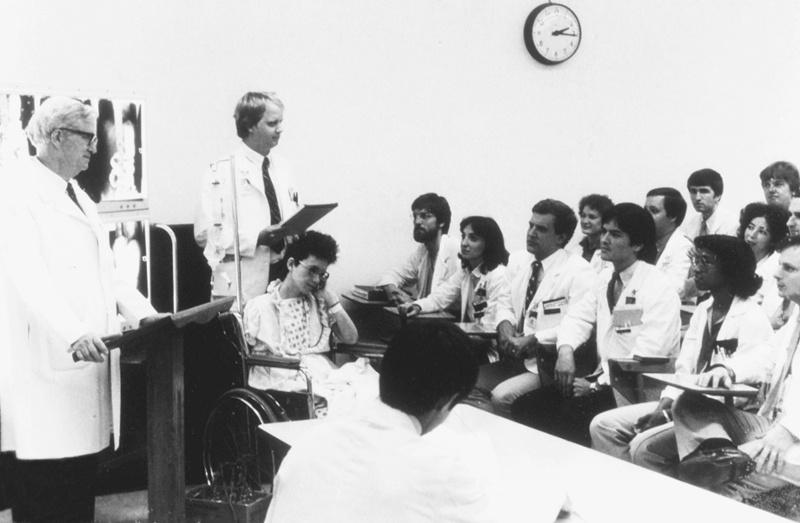
Original Classrooms and Lecture Hall – umc.edu
Mississippi’s Quiet Legacy of Innovation
There is a tendency to underestimate places like Mississippi when it comes to innovation. But the story of the first lung transplant challenges that assumption.
This was not an accident. It was the result of institutional support, a culture of bold experimentation, and a willingness to take risks in pursuit of progress.
In other words, the same ingredients that fuel innovation anywhere else.
And it is not an isolated case. Mississippi has contributed to breakthroughs in medicine, chemistry, and industry, often without the recognition those achievements deserve.
Reclaiming the Narrative
For a city like Jackson, this story is not just history. It is identity.
At a time when conversations about Mississippi often focus on its challenges, the legacy of Dr. Hardy offers a different perspective rooted in ingenuity, courage, and global impact.
It is a reminder that innovation does not belong to a single geography.
It can happen anywhere.
Even here.
A Story Worth Telling and Retelling
The first lung transplant was not perfect. It was not polished. And it certainly was not guaranteed to succeed.
But it was bold.
And bold ideas are where progress begins.
So the next time someone talks about the future of medicine, it is worth remembering that one of its most important chapters started not in a coastal tech hub, but in an operating room in Jackson, Mississippi.
A place that, for one pivotal moment, helped the world breathe a little easier.