Jackson, Mississippi, might not be the first place that comes to mind when you think “clean energy frontier,” but behind the scenes, sparks are flying. From microgrids at medical centers to solar pilot projects in multifamily homes, and university researchers chasing novel catalysts, Jackson (and its surrounding institutions) is staking a claim in the renewable transition. Let’s take a tour.
Solar on the Ground: Belhaven, Behind the Meter
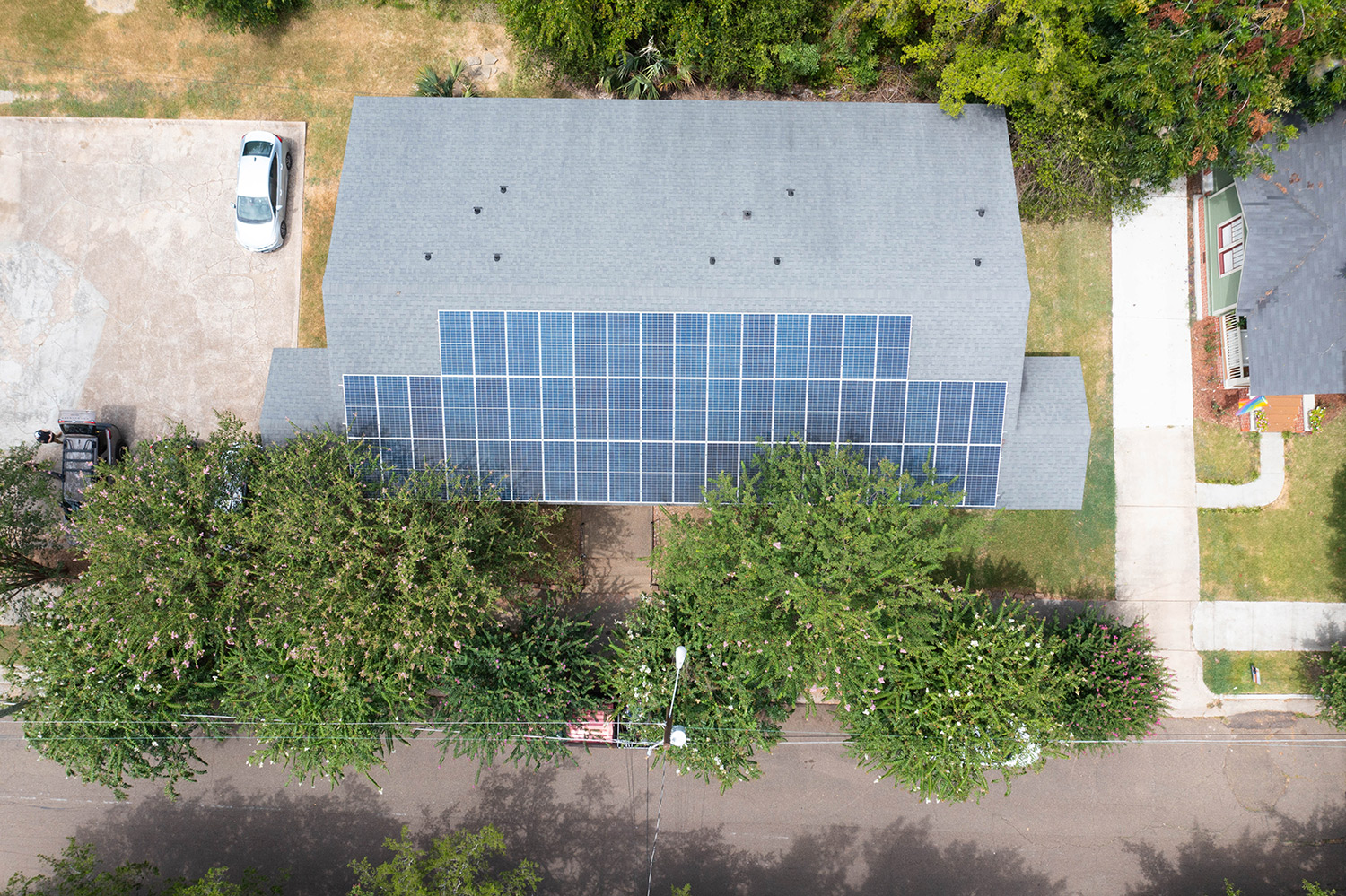
One of the more tangible recent developments is a rooftop solar pilot in Jackson itself. Allume Energy announced that it successfully commissioned its SolShare clean energy deployment at 805 Madison Street, a multifamily building owned by Belhaven Residential. This “behind-the-meter” installation lets multiple units share a solar array, a promising model for dense urban settings. (Allume Energy press release) Allume Energy News
Why this matters: such projects help test how renewables can reach renters or small-scale residents who normally can’t deploy full rooftop systems. It’s local, visible, and a proof of concept.
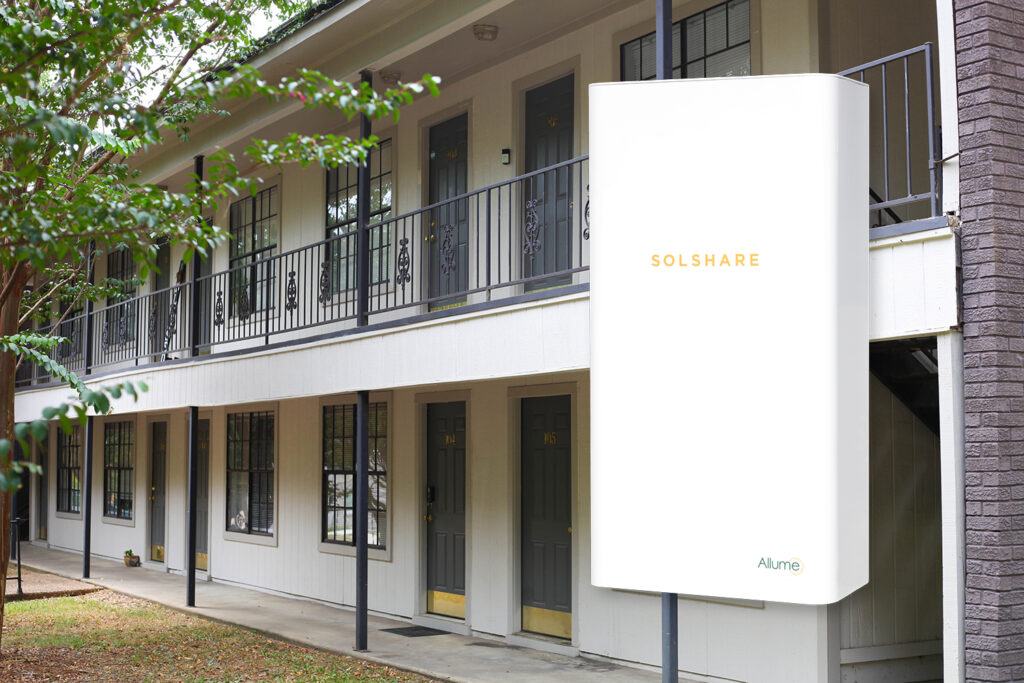
Taronga Group – Belhaven Residential and Allume – Access to shared solar for multi-family residences in Mississippi
Microgrid at UMMC: Islands in the Grid
The University of Mississippi Medical Center (UMMC), right in Jackson, is part of a larger microgrid design project. Working with Microgrid Labs and EPRI, planners have modeled a 20 MW campus microgrid for UMMC. The conceptual design includes solar PV, battery storage, and combined heat & power (CHP). (Microgrid Labs) Microgrid Labs
A microgrid offers resilience: during grid outages, the campus could island itself, relying on stored energy or generation. Given Jackson’s infrastructure challenges, that matters a lot.
Universities & Clean Energy Research
Beyond sites and pilots, academic work is happening (though sometimes quietly).
- At Jackson State University (JSU), Dr. Berneece Herbert recently secured a $499,996 grant from the Gulf Research Program (National Academies) to lead a workforce development initiative targeting minority youth, to prepare them for careers in clean energy. (JSU News) JSU MS News
- Also at JSU, Assistant Professor Saiful M. Islam and collaborators won a $100,000 award from the U.S. Department of Energy. The goal: build research and educational capacity in clean energy at HBCUs (historically Black colleges and universities). (JSU News) JSU MS News
- The University of Mississippi (Ole Miss) is home to the JURSS Lab, an interdisciplinary team looking at earth-abundant catalysts for energy conversion chemistry. Among their aims: turning solar energy or renewable electricity into chemical bonds like hydrogen (H₂) or methane (CH₄), and doing electrochemical & light-driven catalysis. (JURSS Lab) Jurss Lab
- Ole Miss also has a broader set of energy research interests: biofuels, alternative power, solar, fuel cells, electrode materials, nanomaterials, etc. Their “Expertise in Energy Research” page lists dozens of faculty working in these areas. (Ole Miss Research) Ole Miss Research
While some of this work is centered in Oxford or statewide, the intellectual energy extends to Jackson through collaborations, student pipelines, and statewide energy networks.
Policy & State-Level Momentum
Jackson’s influence is not only academic or project-based — it’s also political.
- The Mississippi Office of Energy / Mississippi Development Authority states that the state is actively promoting renewable and clean energy including biomass and other resources. (Mississippi Office of Energy) Mississippi Development Authority
- In 2025 the state launched “Mississippi’s Power Play,” a strategy to attract private sector investment and boost high-paying jobs in clean energy. The kickoff summit was held in Jackson with energy and government leaders across the state. (Office of the Governor) Office of Governor Tate Reeves
- At the utility level, Mississippi Power says it is exploring renewable generation options and partnering with other entities to evaluate cost-effective renewables. (Mississippi Power – Renewable Energy) Mississippi Power
- Meanwhile, in Hinds County (which includes parts around Jackson), supervisors approved a conditional-use permit for the Soul City Solar project — potentially Mississippi’s largest solar farm. It is expected to serve ~95,000 homes once completed (estimated by 2027). (AP News) AP News
So the policy environment is pushing in the same direction as grassroots experiments.
The Ins and Outs: Challenges Ahead
This all sounds promising, but Jackson’s clean energy trajectory has wrinkles to iron out.
- Funding and Scale
Many projects remain pilots or modeling exercises. Moving from concept to widespread deployment demands capital and political will. - Grid constraints & aging infrastructure
Microgrids can help locally, but the underlying grid must also modernize. Jackson (and much of Mississippi) has legacy systems and sometimes limited capacity for two-way energy flows or distributed resources. - Community buy-in & justice
As the Soul City Solar debate shows, not everybody welcomes large-scale solar in their backyard. Noise, land use, environmental impact, aesthetics — these debates matter. (AP News) AP News - Workforce & education gaps
Even if technology is ready, you need trained people. The JSU and DOE grants help bridge that, but it’s a long journey. - Local context
Jackson’s infrastructure, demographics, and urban layout are unique. Solutions must be tailored — not copy-pasted from other cities.
What Jackson Brings to the Table
So, why should we care about Jackson in this push for cleaner energy? Because the city can be a model for mid-size urban centers in the South.
- Resilience matters — microgrids, local generation, and storage can help buffer power disruptions.
- Equity is front and center — hitting underserved neighborhoods, making solar accessible to renters, training local youth.
- Cross-sector leverage — hospitals, universities, local government, utilities — Jackson has all those institutions.
- Visibility & symbolism — making clean energy visible (rooftop solar, murals, community projects) helps change perceptions.
A Glimpse Into Tomorrow
Picture this: a Jackson where churches host solar canopies, the Mississippi State building has a battery-backed rooftop array, community centers even in neighborhoods get shared solar modules, and a UMMC microgrid hums quietly, occasionally islanded during storms, keeping critical services alive. Local high schoolers intern in energy labs, their senior projects tied to real catalysts or storage chemistry.
That future is not guaranteed — it takes strategy, funding, persistence, and community involvement. But Jackson already has multiple threads in motion. Whether the city becomes a hub for clean energy leadership depends on how these threads are woven.
If you like, I can pull together a shortlist of local people (researchers, officials, nonprofit leaders) you could interview to bring more voices into this article. Would you like me to do that next?