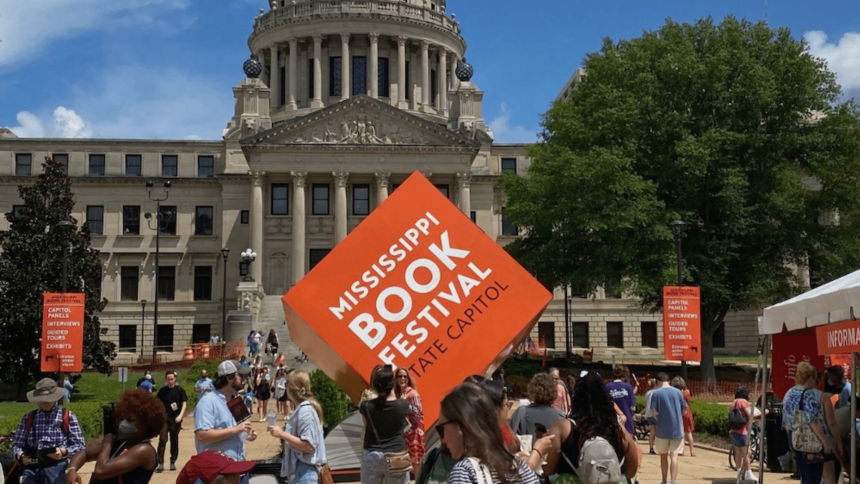
Jackson, Mississippi, early on the morning of Saturday, September 13, 2025, the State Capitol grounds began humming with anticipation. White tents lined the sidewalks, pastel banners fluttered, and the Capitol dome gleamed under a clear sky. Readers, families, and authors began gathering for what has become one of the South’s most celebrated literary events: the Mississippi Book Festival, now in its 11th year. The free, day-long festival brought together writers, publishers, booksellers, and thousands of book lovers to celebrate stories in every form.
From Humble Beginnings to a Statewide Institution
The Mississippi Book Festival was founded in 2015, and its growth over the past decade has been striking. What started as a modest gathering on Capitol Hill has blossomed into a major cultural anchor for Jackson and for Mississippi more broadly. The festival is often described as a “literary lawn party,” a term used by organizers and attendees alike, and the description is fitting. It is part book fair, part conference, and part community celebration (Mississippi Book Festival, official site).
By 2025, the festival regularly drew tens of thousands of visitors. The expansion was reflected not only in attendance numbers but also in the scope of programming. According to reporting from SuperTalk Mississippi, more than 80 panelists were booked to participate in this year’s discussions, covering genres ranging from history and biography to contemporary fiction, poetry, and memoir (SuperTalk Mississippi, August 2025).
Festival Highlights in 2025
The 2025 festival schedule offered something for everyone.
- Panel Discussions: Conversations were held in venues surrounding the Capitol, with topics ranging from Southern literature to national politics. Authors represented Mississippi, the broader South, and the national stage. (SuperTalk Mississippi, 2025).
- Workshops: A standout was “Keep It Short”, led by author Steve Almond and former Mississippi Poet Laureate Beth Ann Fennelly. This session focused on the craft of flash fiction and micro-memoir, giving attendees practical tips on conciseness and creativity (Mississippi Book Festival, 2025 schedule).
- Authors Alley and Booksellers Row: Self-published authors and regional writers filled Authors Alley, while Booksellers Row featured independent bookstores and publishers from across Mississippi and beyond. These areas created spaces for discovery, connection, and book buying directly from creators (Mississippi Book Festival, official site).
- Kids and Family Programming: Families were not left out. The festival provided children’s storytelling tents, activity corners, and family-friendly sessions designed to encourage a love of reading from an early age (Mississippi Book Festival, official site).
- Food and Music: Local food trucks and live musicians gave the festival its Jackson flavor, ensuring that it was not only intellectually engaging but also culturally rich and festive (Mississippi Book Festival, official site).
Voices from the Festival
Perhaps the clearest picture of the festival’s impact came from its leadership. Ellen Daniels, Executive Director of the Mississippi Book Festival, told Q105 Mississippi News: “This event is massively important to not only our city but our entire state, and to see how it’s grown and expanded through the years has been incredible. From hosting literary legends to fostering educational opportunities, the festival would never have been able to leave such a lasting impact without [attendees’] support, and that is not lost on us” (Q105 Mississippi News, August 2025).
Daniels’s words underscore the dual role of the festival: it is both a stage for world-class writers and a gathering space for Mississippi’s own literary community.
Attendees echoed that sentiment throughout the day. Families lingered in the children’s tents, while college students clustered around panel venues. Independent authors reported strong book sales, and many spoke about how valuable the exposure was. While not all attendees were quoted in coverage, the atmosphere itself reflected pride and enthusiasm for Jackson as a literary hub.
Why It Matters
The Mississippi Book Festival has always been about more than books. It is about identity, pride, and connection.
On one level, the festival puts Mississippi writers and stories in the spotlight. The state has produced literary giants such as William Faulkner, Eudora Welty, Richard Wright, and Jesmyn Ward, and the festival provides a stage for established and emerging voices alike. By situating these conversations at the State Capitol, the festival symbolically ties literature to civic life.
On another level, the festival strengthens Jackson’s cultural footprint. As noted by Visit Jackson, the event draws thousands of visitors into the city, providing an economic boost through tourism, dining, and lodging (Visit Jackson, official event page). It also creates educational opportunities for students and young readers, ensuring that the next generation sees literature as accessible and vital.
A Festival That Learns and Adapts
One of the notable changes in 2025 was the timing. The festival, traditionally held in August, was moved to September in an effort to provide more comfortable weather for attendees. Daniels and other organizers cited feedback from past years about Mississippi’s summer heat and believed that early fall would be a better fit. As reported by Q105 Mississippi News, this date shift was part of broader efforts to improve the festival experience (Q105, August 2025).
Looking Ahead
After 11 successful years, the Mississippi Book Festival shows no signs of slowing down. The combination of national talent, local pride, and a family-friendly environment ensures that it remains one of Jackson’s premier cultural events. The festival’s growth also reflects the strength of the city’s creative community. Each year, more writers, more publishers, and more readers gather on Capitol Hill, and each year the event strengthens Mississippi’s identity as a place where stories matter.
For readers who could not attend in 2025, organizers have already promised to release recordings of select panels and workshops online (Mississippi Book Festival, official site). Looking toward 2026, the planning has already begun.
Conclusion
As the sun set over Jackson on September 13, festivalgoers packed up their signed books and last-minute purchases, still buzzing with conversations and ideas sparked throughout the day. The Mississippi Book Festival was not only a celebration of literature but a testament to the power of community. In the words of Ellen Daniels, the event thrived because of the people who showed up and made it matter.
For Jackson, the festival was more than a day of panels and book sales. It was a reminder that literature connects people, shapes identity, and builds bridges across generations. And for anyone who walked the Capitol grounds that Saturday, it felt like being part of something bigger than a single event. It felt like being part of a story.