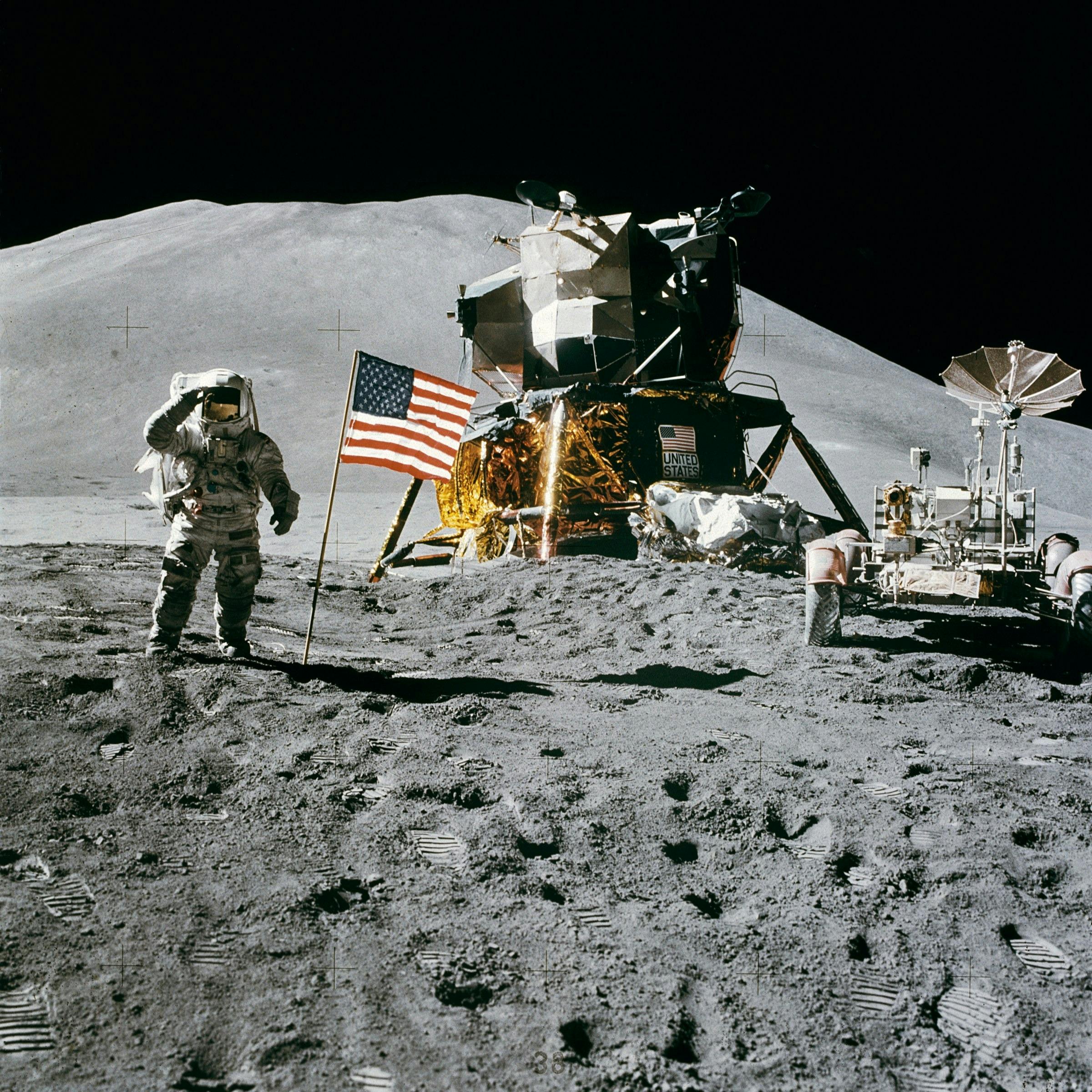
When people picture the moment humans first stepped onto the moon, they usually see a rocket lifting off from Florida and a grainy broadcast watched around the world. It feels big, distant, and a little untouchable.
What most people do not picture is Mississippi.
But maybe they should.
Because long before that rocket ever left the ground, some of the most important work that made that moment possible was happening right here. Not in front of cameras for applause, but deep in South Mississippi at Stennis Space Center.
If the launch was the moment the world held its breath, Stennis was where the confidence was built.
Where rockets proved they were ready
Before astronauts ever strapped in, the engines that would carry them had to be tested under extreme conditions. That is exactly what happened at what was originally called the Mississippi Test Facility, built in the 1960s during the height of the Space Race (NASA, 2019).
The location was entirely intentional. Engineers needed a place with room to operate safely, where massive tests could happen without putting dense populations at risk. South Mississippi offered the space, the geography, and the access needed to make it work (NASA, 2019).
So while the world watched launches from Florida, Mississippi became a place where missions were made ready.
At Stennis, engines were fired as if they were already in flight. The same engines that powered the Saturn V rocket, the one that would carry astronauts during the Apollo 11 Moon Landing, were pushed to their limits here (NASA, 2020).
A front-row seat to something extraordinary
For people living nearby, the Space Race was not something you only saw on television.
It was something you felt.
Engine tests were powerful enough to send vibrations through the ground and echo across miles. Windows rattled. Conversations paused. It was a reminder that something ambitious was unfolding just down the road.
There is something special about that perspective. While the rest of the country watched history happen, Mississippi was part of the process that made it possible.
A legacy of building what comes next
The story of Stennis Space Center is not just about the past. It is about a pattern that continues.
Stennis remains one of NASA’s primary rocket engine testing sites today. It has supported work tied to newer exploration programs and continues to play a role in what comes next for space travel (NASA, 2021).
That means the same ground that helped power missions to the moon is still helping shape future exploration.
There is a quiet kind of momentum in that.
Rethinking what innovation looks like
We tend to picture innovation as something that happens somewhere else. Big cities. Coastal hubs. Places already known for tech and research.
But Mississippi tells a different story.
Innovation is not always about where something is built. Sometimes it is about where it is tested, refined, and trusted. Sometimes it is about creating the conditions for success, even if that work happens out of the spotlight.
And that is exactly what happened here.
What this says about Mississippi now
Stories like this do more than highlight a moment in history. They offer a different way to think about the present.
Mississippi has already shown that it can be part of something as ambitious as sending humans to the moon. That kind of contribution does not happen by accident. It takes infrastructure, expertise, and a willingness to invest in big ideas.
Those same ingredients still exist.
The presence of facilities like Stennis Space Center points to something bigger than a single achievement. It suggests a foundation that can continue to support innovation, whether in aerospace, medicine, or industries still taking shape.
A story worth carrying forward
Before the countdowns, before the cameras, before the first step on the moon, there was a stretch of land in South Mississippi where engines roared to life and proved they were ready.
That is not a forgotten part of the story. It is a foundational one.
And maybe it is also a reminder.
Mississippi has never been as far from the future as people sometimes assume. In many ways, it has already helped build it.
The question now is not whether the state can be part of something big again.
It is how we choose to recognize it, invest in it, and keep that momentum going.