

Artificial intelligence is quickly becoming part of everyday work across the country. Businesses are experimenting with new tools, employees are searching for ways to use them productively, and entire industries are beginning to rethink how work gets done. In Mississippi, interest in learning about AI is rising just as quickly.
Search data shows that more people are looking for practical ways to understand and use AI tools. The curiosity is there. What is still developing are clear pathways for learning how to apply those tools in real jobs and industries. This gap creates an opportunity.
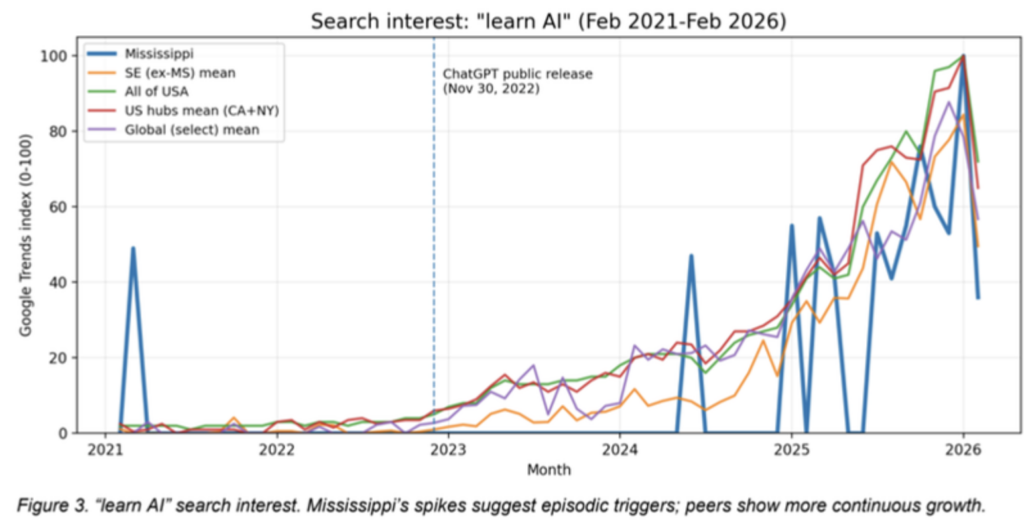
Colleges and community colleges are uniquely positioned to help bridge it by building applied AI learning ecosystems. Instead of focusing only on theory, these ecosystems emphasize hands on learning that helps students and working professionals use AI tools in real world settings.
If institutions move in this direction, the impact could reach far beyond campus.
Applied AI programs can help meet growing workforce demand as companies look for employees who understand how to work alongside intelligent systems. They can also strengthen regional economies by embedding new technical skills directly into local businesses.
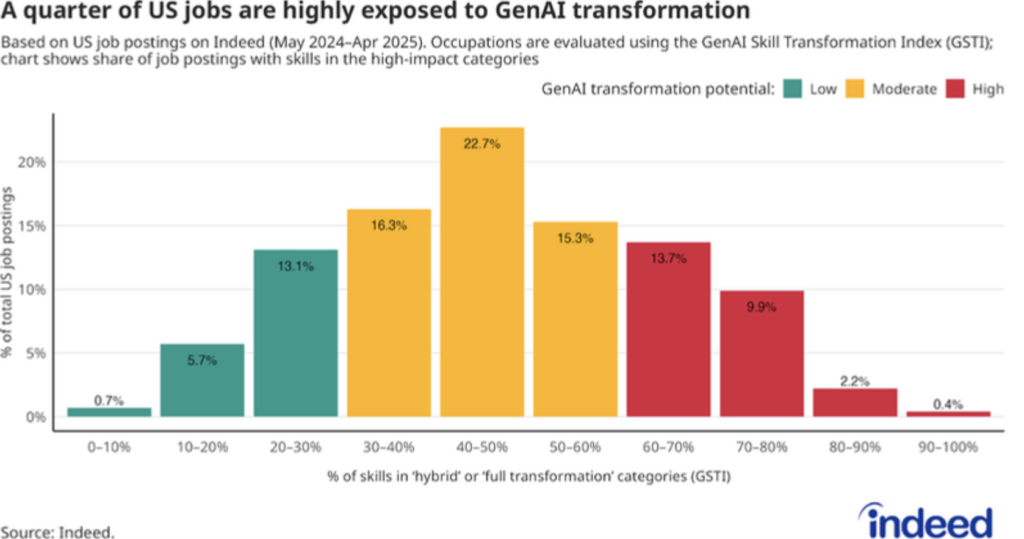
In this model, colleges become more than places where students earn degrees. They become engines of regional competitiveness.
Community colleges may play an especially important role. Their close relationships with local industries position them to train people who can immediately bring AI skills into the workforce. That kind of workforce readiness can help small businesses, startups, and established companies adopt new technologies more confidently.
The idea behind this approach is sometimes described as the Educator Economy. It reflects a shift in how economic growth can happen in the AI era.
Instead of innovation happening only in large technology hubs, knowledge and capability can spread through education networks that prepare people to apply new tools where they live and work.
For Mississippi, that possibility is particularly compelling. With the right learning ecosystems in place, classrooms could become a powerful catalyst for economic growth, helping communities adapt to emerging technology while strengthening the state’s position in the future of work.