
Most of us think about batteries powering phones or electric cars. But a new kind of battery is emerging that does something entirely different. Instead of storing electricity, this technology stores heat. It could change the way factories around the world produce heat and drastically cut reliance on fossil fuels while lowering energy costs for heavy industry (Fast Company, 2026) (MIT News, 2024).
At the heart of this innovation is a company called Electrified Thermal Solutions, a startup that grew out of research at the Massachusetts Institute of Technology. Their thermal battery technology, called the Joule Hive Thermal Battery, uses a stack of electrically conductive firebricks that can be heated up to about 1,800 degrees Celsius (3,272 degrees Fahrenheit), hot enough to run high‑heat industrial processes like steelmaking, cement production, or chemical manufacturing (Fast Company, 2026) (Electrified Thermal Solutions, 2026).
This tech works by storing heat when electricity is cheap or abundant, often from renewable sources like wind or solar. Later, when heat is needed on the factory floor, the system releases that stored heat to deliver hot air or steam to industrial processes. In this way, factories can shift away from burning natural gas or coal toward zero‑carbon electrified heat that is also cost competitive (Electrified Thermal Solutions, 2026) (MIT News, 2024).
Thermal battery technology like this is part of a larger class called thermal energy storage, which captures heat in materials such as bricks, rocks, or molten salts and holds it until needed (RMI, 2025). What makes the Joule Hive standout is its ability to reach very high temperatures using the bricks themselves as both the heater and heat store, which simplifies the design and improves efficiency (Electrified Thermal Solutions, 2026).
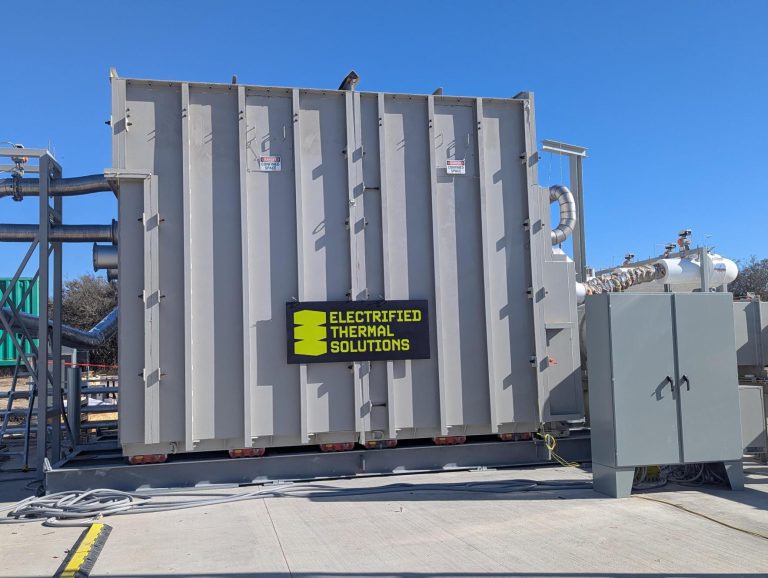
Image from Electrified Thermal Solutions
Why This Matters for Clean Energy
Heavy industry is one of the hardest sectors to decarbonize. It consumes enormous amounts of energy and currently relies on fossil fuels to generate very high heat. In fact, industrial heat accounts for nearly one fifth of global energy consumption today (Environment + Energy Leader, 2024). Thermal batteries offer a way to replace fossil fuel burning with renewable electricity, helping manufacturers cut carbon emissions and operate more sustainably while stabilizing energy costs (RMI, 2025) (Fast Company, 2026).
By storing energy when prices are low and releasing it on demand, thermal batteries also help balance the grid, making renewable power more reliable and easier to integrate. That means solar and wind can be used more effectively without the same need for backup sources (RMI, 2025).
What This Could Mean for Jackson
Now you might be wondering, what does this high‑tech industrial research have to do with Jackson, Mississippi communities and economy? Quite a bit.
1. Attracting New Industrial Investment
Jackson has a strategic location with access to transport infrastructure, labor resources, and proximity to regional energy markets. As industries look to lower emissions and energy costs, new manufacturing or processing facilities using electrified heat solutions could find Jackson a compelling place to operate. Local leaders and economic development agencies could position the city as a hub for clean industrial innovation.
2. Growing Clean Energy Workforce Opportunities
Thermal battery systems and other clean energy infrastructure create demand for skilled technicians, engineers, installers, and maintenance workers. Jackson’s educational institutions and workforce development programs could partner with industry and state leaders to train residents for these new job pathways, blending traditional mechanical skills with emerging energy technologies.
3. Supporting Local Energy Strategy
Mississippi and cities like Jackson are rich in potential renewable energy resources, including solar and biomass. Coupling local clean energy generation with advanced storage solutions like thermal batteries could help stabilize local energy costs, reduce emissions, and enhance resilience in the face of climate variability.
4. Strengthening Regional Industrial Networks
Thermal battery tech is still early in deployment, but companies like Electrified Thermal Solutions are preparing for commercial rollouts in 2026 and beyond (TMCNet, 2026). Partnerships between regional utilities, industry players, and innovators could position Jackson and central Mississippi as key participants in the clean heat economy.
A Path Forward
Electrifying industrial heat with thermal battery technology shows how creative problem solving in a lab can ripple outward to cities and communities everywhere. For Jackson, this technology could help support economic diversification, workforce growth, and a cleaner industrial future.
As thermal energy storage systems become more affordable and widespread, communities that understand and prepare for these changes will be better positioned to thrive in a decarbonizing world. Jackson has the chance to join that transition and foster local innovation while bringing jobs and investment to the region.